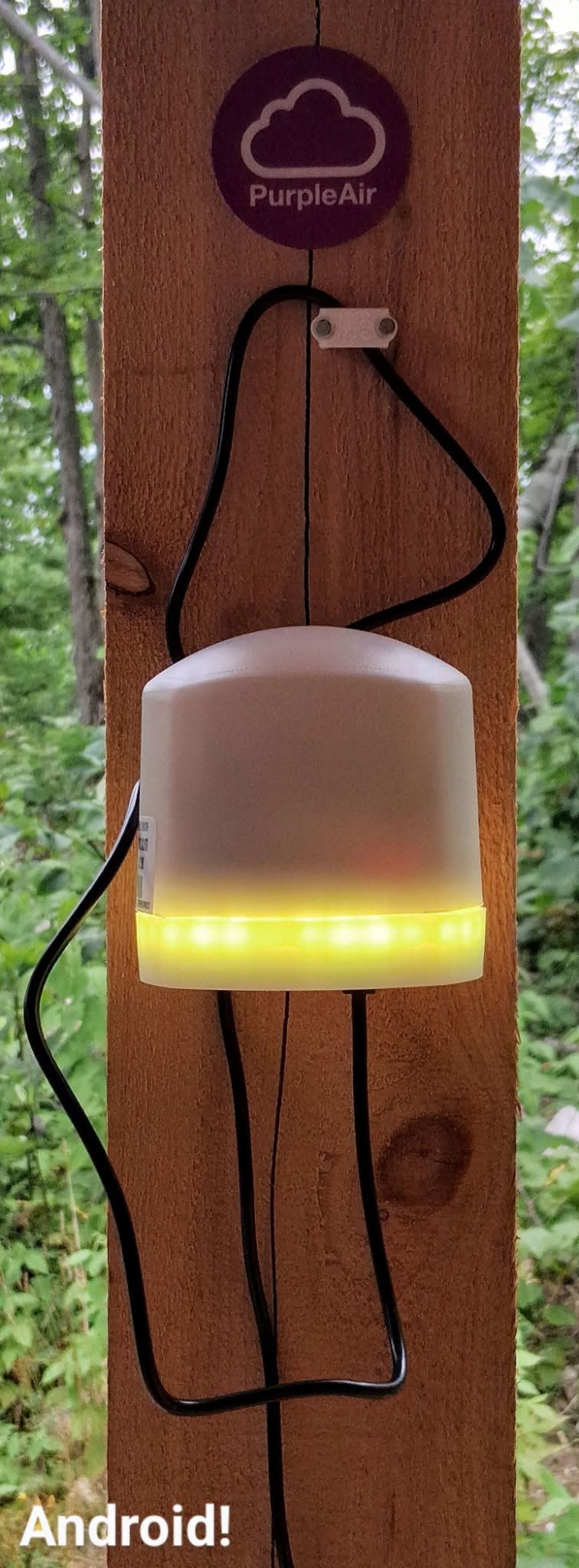
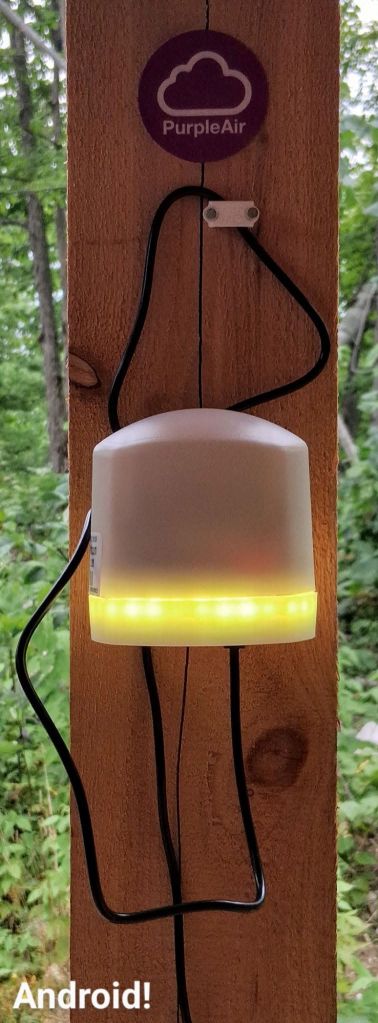
Our home now has an air quality monitor, that’s feeding real-time data into the larger (US’ EPA and Canada’s Environment Canada) AQI measurement network. It’s citizen science and we both want to contribute to it. The translucent white UFO bolted to the pillar (#4) is the PurpleAir monitoring device. Here’s a widget to our particular station (UPDATED EVERY 10 MINUTES):
… … … … Yeah, about that widget. PurpleAir’s code won’t play nice with WordPress. And I’m not an HTML guru, so the link led to a spewage of code. Go to the PurpleAir website, navigate to the interactive map, and look up our location.
Try this link. It should lead you to our monitoring station.
We inherited TS’ mom had a basic indoor/outdoor thermometer and barometer unit (#2). While it cannot receive the radio broadcasts from atomic clocks, I like its simplicity. Items #1 and #3 are different attempts at getting readings from analogue scientific equipment. The hygrometer is just a glorified knot of fiber calibrated to twist a needle to indicate percentage relative humidity (%RH) and it has a bimetallic strip for air temperature.
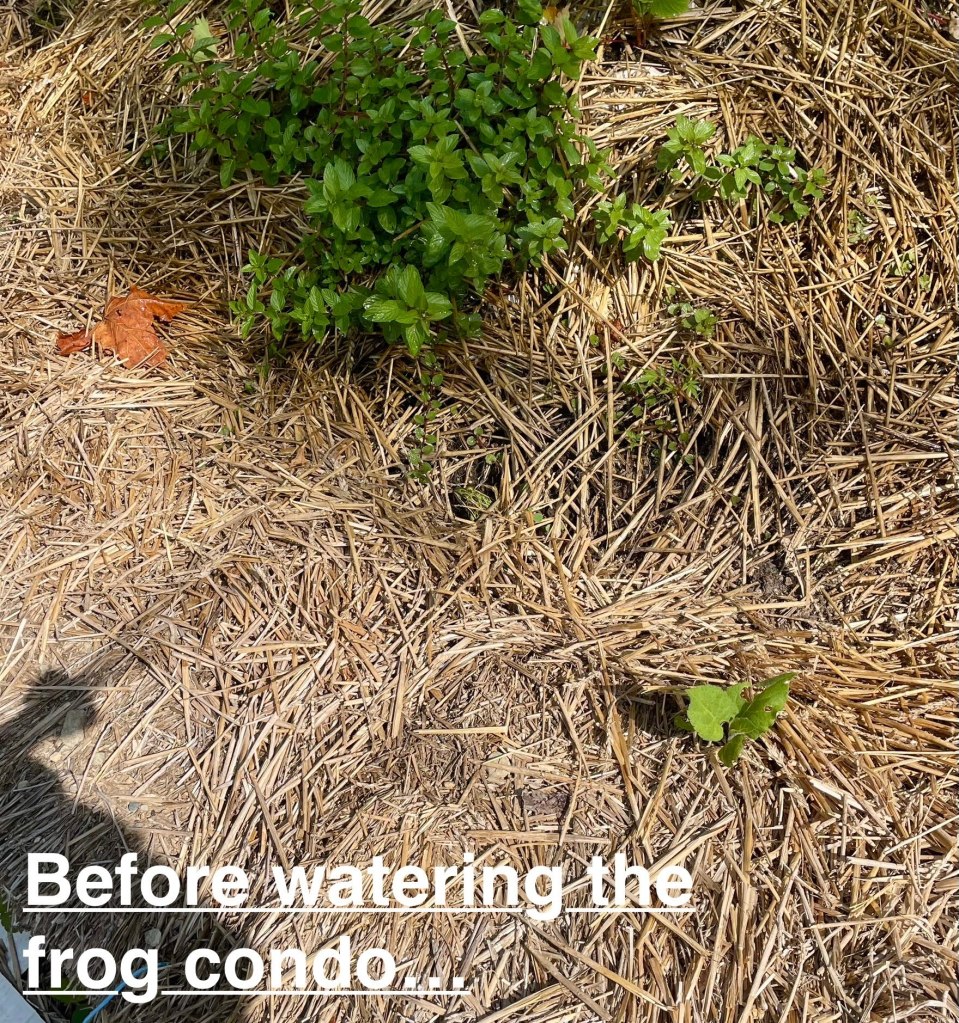
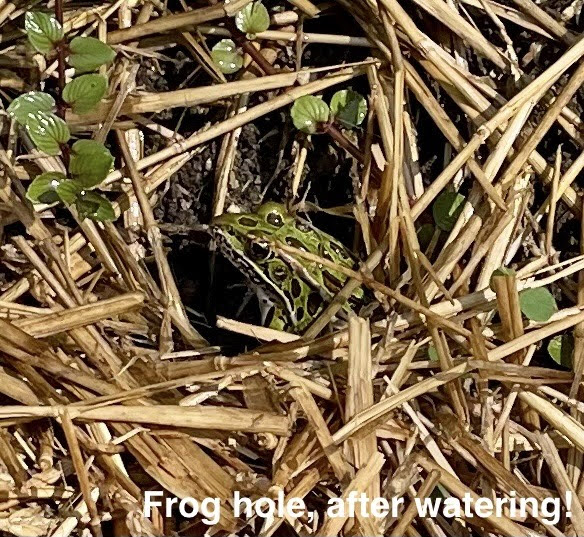
Our hugelkultur efforts are producing habitat for local amphibians. The buried wood debris provides cavities that can be used by reptiles and amphibians to escape extreme weather conditions. Humans fucked up the climate… it’s the least we can do to mitigate human activity.
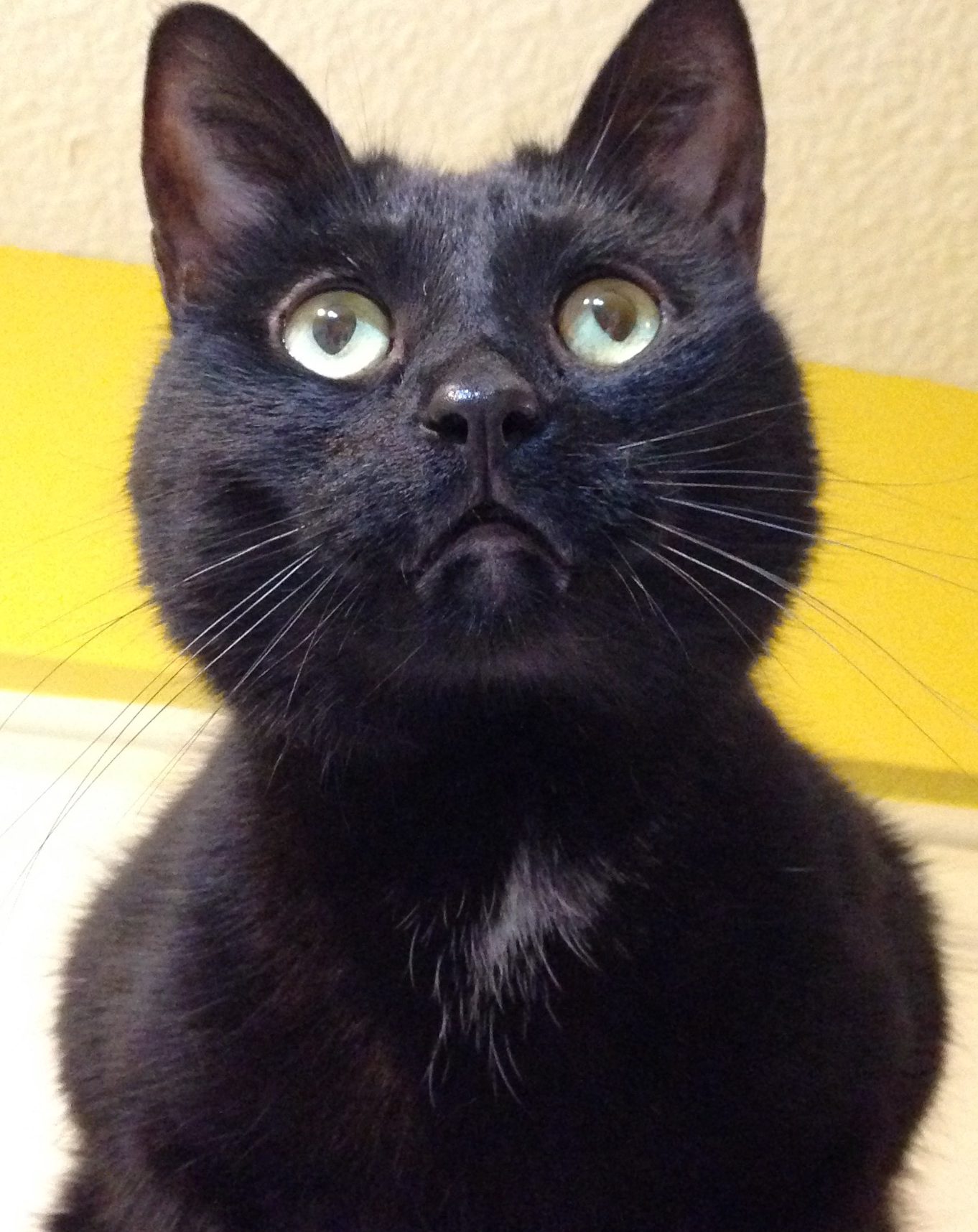
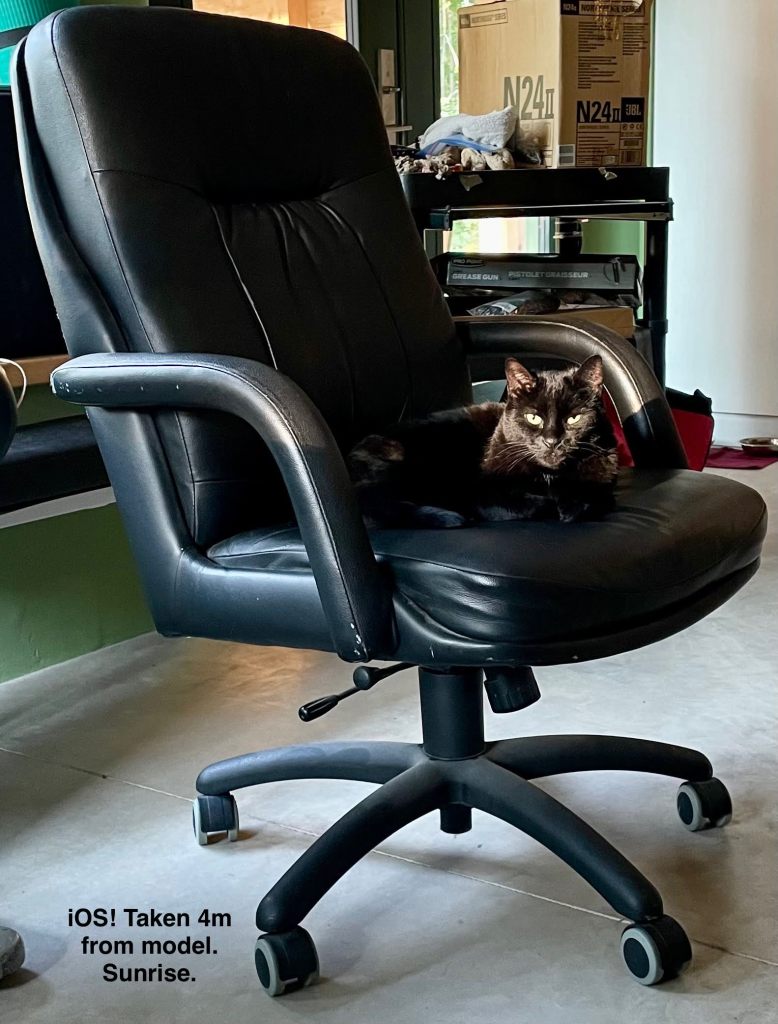
Optics and digital photography are shown with 2 images of our elusive (read, scaredy-cat) house-panther, Io. I believe the Apple and Samsung glass optics and light sensor are essentially the same quality. I suspect it’s the software that determines the viewable image. AndroidOS prioritizes colour, at the expense of smearing the fine details. AppleOS prioritizes resolution, at the cost of adding weird colour artifacts. My Nikon DSLR might have yet another priority…. or just let me screw around with the data!

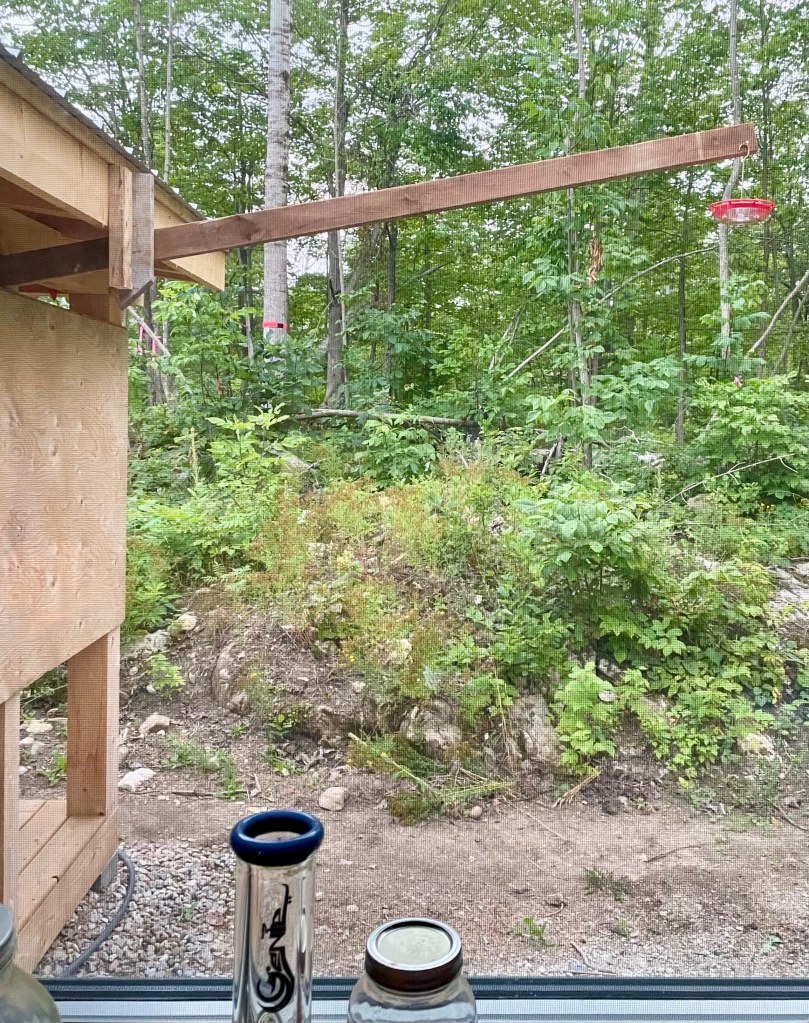




What do pictures of a hummingbird feeder (by the kitchen window) and prospective firewood splitters have to do with citizen science? If I define citizen science as what we can do to reduce environmental degradation or build biodiversity (instead of defining citizen science as non-centralized R&D), then sure! It’s community science. Wood splitters: I can’t keep up with splitting thousands of logs scattered around the property lines and stacked up at our upper parking lot. I can use my chainsaws, that use biodegradable chain oil (that can safely aerosolized without poisoning water systems) to lop it into blocks. If the wood is semi-rotten (punky), then it can be used as a base for layered garden beds.
 BCB&B, neemtree, bdb, and blog